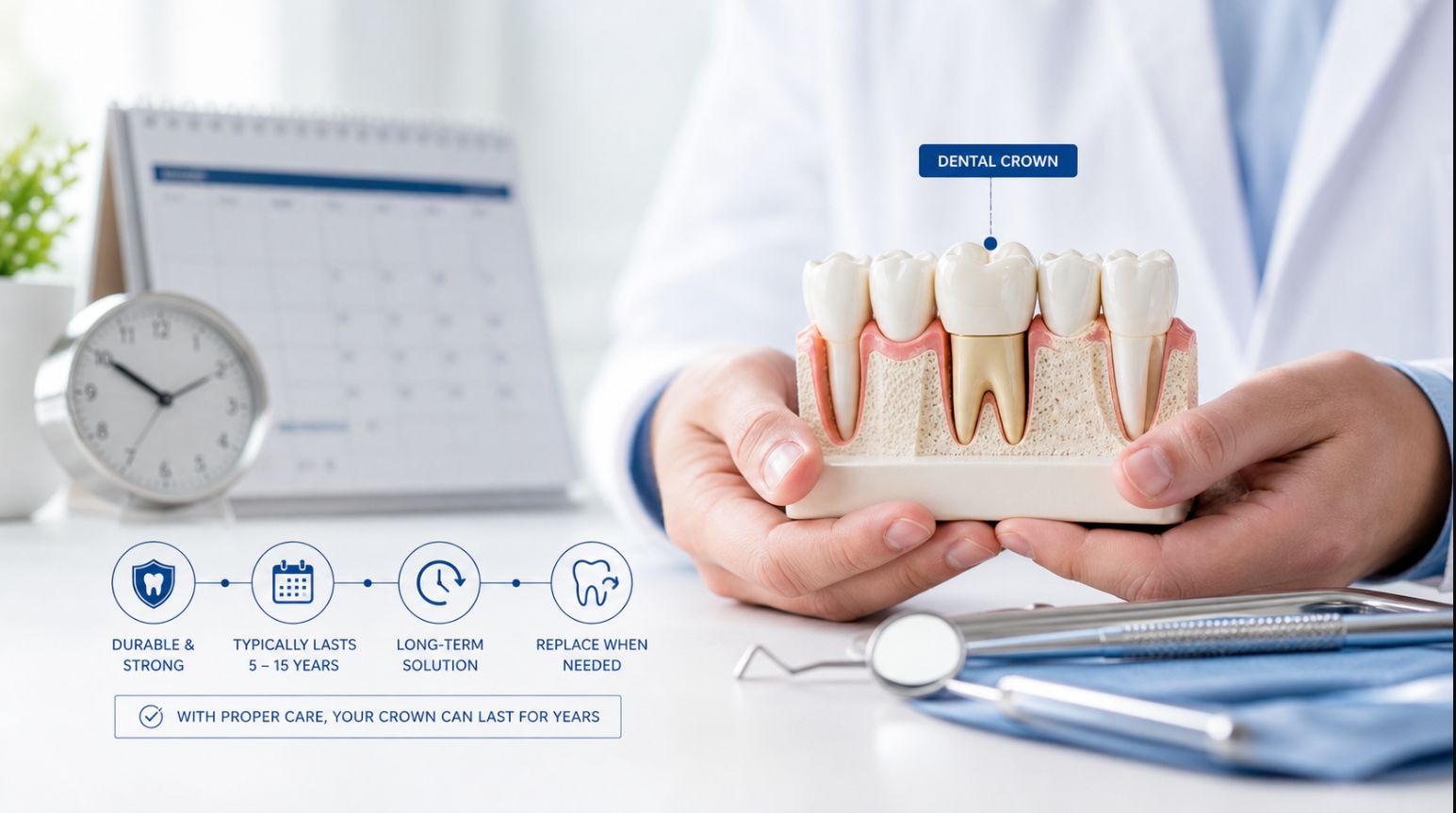
Dental crowns usually last 10 to 15 years on average, but many last longer with good care, and some can stay functional for 20 years or more. For a UK-facing dental tourism article, the most accurate way to frame it is simple: crown lifespan depends less on one magic number and more on the material, the dentist’s technique, and how well the patient maintains the tooth.
What Is a Dental Crown?
A dental crown is a custom-made cap that fits over a damaged tooth to restore its shape, strength, and function. Dentists commonly recommend crowns when a tooth is badly decayed, cracked, worn down, or weakened after root canal treatment. In practical terms, crowns protect a tooth that cannot reliably hold a large filling on its own.
For dental tourism patients, crowns are often chosen because they can deliver a strong, long-lasting restoration while also improving appearance, especially for front teeth and visible smile zones. They are also used when bite forces are high or when a tooth has already lost a lot of structure.
Crown Lifespan by Material
The material plays a major role in how long a crown lasts. Metal and gold-based crowns tend to be the most durable, while resin crowns usually have the shortest lifespan.
Clinical studies support the idea that many crowns survive well beyond 10 years, with survival rates still strong at the 10- and 15-year marks depending on the type and patient factors. In England and Wales data, metal crowns showed the longest survival at 10 years, while all-porcelain crowns showed the shortest survival.
What Shortens Crown Life
Several everyday habits can make a crown fail earlier than expected. Poor oral hygiene is one of the biggest risks, because decay can still develop at the margin where the crown meets the natural tooth. Teeth grinding, also called bruxism, is another major issue because repeated pressure can crack ceramic surfaces or loosen the restoration.
Other common factors include poor fit, cement failure, gum disease, trauma, and bite misalignment. Lifestyle matters too: frequent hard or sticky foods, chewing ice, smoking, and heavy alcohol use can all increase wear or raise the risk of complications around the crown. In tourism dentistry, this is a key point: a crown placed abroad can still last for years, but only if the preparation, bite adjustment, and aftercare are handled properly.
Signs A Crown Is Failing
A crown often gives warning signs before it fully fails. Pain when biting, new sensitivity to hot or cold, visible cracks, or a crown that feels loose should never be ignored. Receding gums can also expose the crown edge and increase the chance of decay at the margin.
You should also watch for visible wear, rough edges, or food trapping around the crowned tooth, since these can signal a poor seal or damage beneath the restoration. If the crown falls off, it may sometimes be re-cemented, but it should still be assessed because the bond has already been compromised.
How To Make It Last
Good daily care makes a real difference. Brush twice a day with fluoride toothpaste, floss daily around the crown, and use interdental brushes if needed to clean the sides and margins properly. Regular dental checkups and professional cleanings help detect small problems before they turn into crown failure.
A night guard is strongly worth considering if you grind your teeth, since bruxism is a well-known cause of crown damage. It also helps to avoid hard foods, sticky sweets, chewing ice, and using teeth to open packaging, because these habits can chip porcelain or loosen the crown. For patients traveling abroad for treatment, clear aftercare instructions matter just as much as the restoration itself.
Can It Last A Lifetime?
A crown can last a very long time, but a true lifetime restoration is not the norm. Most patients should expect replacement at some point, even if the crown itself is strong, because the tooth underneath can change over time. In other words, the restoration may still be intact while the supporting tooth or gums gradually become the weak link.
Crowns lasting 20 to 30 years are absolutely possible, especially with metal, gold, or well-made zirconia crowns and excellent maintenance. Still, even the most durable crown may eventually need replacement because of decay beneath it, gum recession, fracture, or a change in bite.
Why Crowns Fail
The most common failure reasons are decay beneath the crown, fracture, retention loss, poor fit, and periodontal problems. Cement can fail over time, especially if the crown was not seated ideally or if repeated bite stress has weakened the bond. Trauma, such as a fall or sports injury, can also damage both the crown and the tooth underneath.
Another important point is that a crown does not make a tooth immune to cavities. The restoration covers the top of the tooth, but the exposed edges near the gumline can still decay if plaque builds up there. That is why long-term success depends on both the crown and the health of the surrounding mouth.
How Replacement Works
Replacing a crown usually begins with an examination and X-rays to check the tooth, root, and surrounding bone. If the crown is removable, the dentist will take it off, treat any underlying decay or infection, and then prepare the tooth for a new restoration. In some cases, a temporary crown is placed while the final one is made.
New impressions or digital scans are then taken, and the replacement crown is fitted and adjusted for bite and appearance. If the problem is minor, such as a small chip or a loose crown, repair or re-cementing may be possible instead of full replacement. The key issue is whether the underlying tooth is still healthy enough to support the crown safely.
Maintenance Tips
A simple maintenance routine can extend crown life significantly. Brush gently but thoroughly twice daily, floss carefully at the crown margins, and keep up with hygiene visits. If your dentist recommends a specific mouth rinse or interdental brush size, follow that advice consistently.
It also helps to reduce the frequency of sugary snacks, because repeated sugar exposure increases the risk of decay at the crown edge. Avoiding habits like chewing pens, ice, or sticky toffees will reduce the chance of chips, loosening, or crack propagation. For tourism patients, ask for written aftercare, the crown material used, and the expected warranty or review policy before leaving the clinic.
Cost of Replacement
Replacement cost depends on the material, the tooth location, the complexity of the case, and whether additional treatment is needed first. If there is decay, gum disease, or root canal retreatment beneath the crown, the price can rise because the dentist must solve the underlying problem before fitting a new crown. Insurance coverage also varies, and some plans may only partially cover replacement or may require waiting periods.
In some cases, repair is cheaper than full replacement, especially for small chips or a loose crown that can be re-cemented. But if the crown is cracked through, badly fitted, or hiding decay, replacement is usually the safer long-term option. For UK readers, NHS charging rules and private pricing can differ a lot, so tourism patients often compare total treatment value rather than crown price alone.
Crowns And Alternatives
Crowns are not always the best option. A filling may be enough for smaller cavities, while veneers are better for mainly cosmetic front-tooth improvements with limited structural damage. Onlays sit between a filling and a full crown and may preserve more healthy tooth structure when the damage is moderate.
As a rule, crowns are most appropriate when a tooth needs full coverage and reinforcement, especially after major decay, fracture, or root canal treatment. Fillings are more conservative but less protective for heavily damaged teeth. Veneers are cosmetic, while onlays are a middle-ground restorative option that can be more conservative than a crown.
Frequently Asked Questions
How often should dental crowns be replaced?
There is no fixed replacement timeline, because some crowns last around 10 to 15 years while others last 20 years or more with excellent care. A crown should be replaced when it shows wear, loosening, cracks, decay underneath, or fit problems.
Can a dental crown fall off?
Yes, a crown can fall off if the cement fails, the tooth underneath changes, or the crown was not fitted properly. If this happens, it should be assessed quickly so the tooth is protected and the crown can sometimes be re-cemented.
Is sensitivity normal after getting a crown?
Mild sensitivity can happen after crown placement, especially to hot or cold foods, but it should improve as the tooth settles. Ongoing pain, pressure pain, or worsening sensitivity may point to a bite issue, leakage, or an underlying problem that needs treatment.
Can cavities develop under a crown?
Yes, cavities can still form at the edge of a crown or beneath it if plaque builds up and the seal is compromised. That is why brushing, flossing, and regular checkups are still essential even after the tooth has been crowned.
Are zirconia crowns more durable than porcelain crowns?
In general, zirconia crowns are considered stronger and more wear-resistant than standard porcelain crowns. Porcelain can look very natural, but it is usually more prone to chipping than zirconia, especially in high-pressure bite areas.
Can a damaged crown be repaired?
Sometimes, yes. Small chips, looseness, or minor damage may be repaired or re-cemented, but larger cracks or a poor fit usually mean the crown needs replacement. A dentist will usually decide after examining the crown and checking the tooth underneath.
Can a dental crown last a lifetime?
A lifetime crown is possible in rare cases, but it is not the usual expectation. Even very durable crowns may eventually need replacement because of wear, gum recession, decay, trauma, or changes in bite over time.
What is the best way to make a crown last longer?
Brush twice daily with fluoride toothpaste, floss carefully, and attend regular checkups and professional cleanings. If you grind your teeth, wear a night guard, and avoid chewing ice, hard sweets, or sticky foods that can damage the restoration.
Sources
- Healthline: How Long Can You Expect a Dental Crown to Last? r
- Cleveland Clinic: Dental Crowns: Types, Procedure & Care
- PMC clinical study on single crowns
- British Dental Journal article on crown longevity
- PubMed: 10-year longitudinal study of metal-ceramic crowns
- PubMed: 10-year prospective study of metal ceramic crowns
- University of Birmingham research summary on crown outcomes
- NHS: Dental treatments
- Leeds Teaching Hospitals NHS Trust: Crowns
- NHSBSA: Guaranteed items of NHS dental treatment
- NHSBSA: NHS dental charges