In a Nuthsell
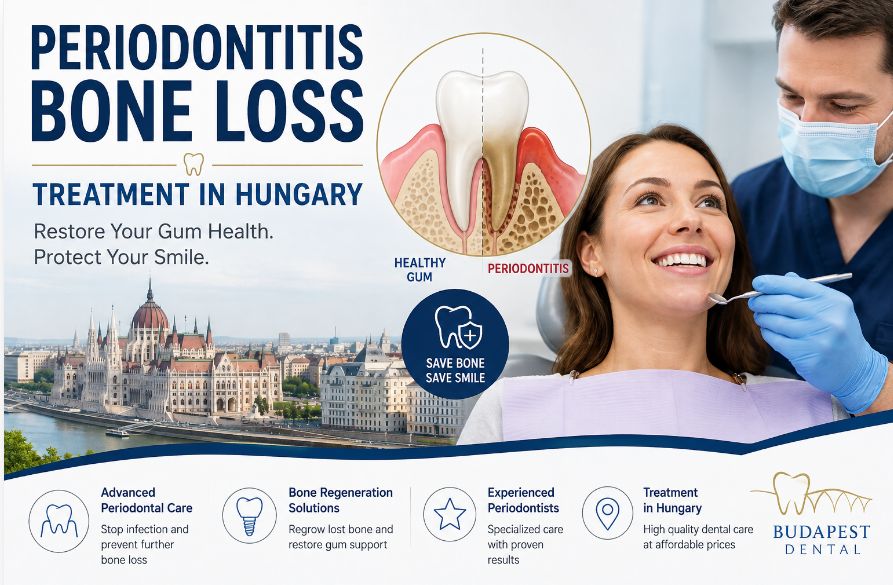
Periodontitis is advanced gum disease that destroys the gum attachment and jawbone supporting your teeth. It cannot usually be “cured” permanently, but it can often be controlled, stabilised and prevented from getting worse with professional treatment and lifelong maintenance.
-
Deep cleaning removes plaque and hardened tartar from beneath the gumline and is the foundation of treatment.
-
Bone loss is often permanent, but selected deep vertical defects may be suitable for regenerative surgery using membranes, enamel matrix proteins or bone-graft materials.
-
Laser treatment is not a stand-alone cure. It may be used as an adjunct in some clinics but does not replace deep cleaning, good daily hygiene or surgery where needed.
-
Smoking, vaping, uncontrolled diabetes and poor plaque control increase the risk of progression and reduce treatment success.
-
Budapest may offer lower private treatment costs than the UK, but compare full treatment plans—not just headline prices. Confirm that periodontal charting, X-rays, deep cleaning, reassessment, surgery, materials and follow-up are included.
-
Long-term maintenance is essential. Brush twice daily, clean between teeth every day, attend supportive periodontal reviews and seek care promptly for bleeding, swelling, pus or loose teeth.
Can Periodontitis Be Cured? Deep Gum Treatment and Bone Loss Care
Periodontitis is an advanced form of gum disease that damages the tissues supporting the teeth. Unlike simple gingivitis, it can cause irreversible loss of gum attachment and jawbone. Left untreated, periodontitis may lead to loose teeth, abscesses, drifting teeth, changes in the bite and eventual tooth loss.
The encouraging news is that periodontitis can usually be controlled. Inflammation can be reduced, bleeding can stop, gum pockets can become shallower and further bone loss can often be prevented. However, lost jawbone does not automatically grow back, and no responsible dentist should promise a complete “cure” in every case.
For patients considering periodontal treatment in Hungary, particularly Budapest, the important question is not simply whether treatment costs less than in the UK. It is whether the clinic offers thorough diagnosis, evidence-based deep cleaning, periodontal surgery where needed, appropriate maintenance planning and realistic follow-up after you return home.
Important: This article is for general education only. Periodontitis requires an in-person examination, gum-pocket charting and dental X-rays. If you have facial swelling, pus, fever, a rapidly loosening tooth or difficulty swallowing or breathing, seek urgent dental or medical care.
What Is Periodontitis?
Periodontitis is a chronic inflammatory disease caused mainly by bacterial plaque accumulating around the teeth and beneath the gumline. The body’s immune response to this bacteria can gradually damage the periodontal ligament, gum attachment and alveolar bone that hold teeth in place.
In healthy gums, the gum tissue fits snugly around each tooth. When periodontitis develops, the attachment between tooth and gum becomes damaged. A gap called a periodontal pocket forms between the tooth root and gum.
Plaque and hardened deposits, known as calculus or tartar, can collect below the gumline inside these pockets. This makes effective home cleaning difficult and allows the disease to progress.
Periodontitis is not simply “dirty teeth”. It is a complex disease influenced by bacterial plaque, immune response, smoking, diabetes, genetics, stress, oral hygiene, medication, diet and regular dental care.
The modern periodontal classification system considers:
- Stage: The severity and complexity of disease, from Stage I to Stage IV.
- Grade: The likely rate of progression and risk factors, including smoking and diabetes.
- Extent: Whether disease affects a small area or much of the mouth.
Gingivitis vs Periodontitis
Gingivitis and periodontitis are related but not the same.
Bleeding gums should never be ignored. They may represent gingivitis, but they can also be the first visible sign of periodontitis.
How Periodontitis Causes Jawbone Loss
Plaque bacteria accumulate around the gumline. If not removed effectively, the gum becomes inflamed. Over time, bacteria move beneath the gumline into the periodontal pocket.
The immune system responds by releasing inflammatory mediators to fight infection. Unfortunately, the prolonged inflammatory reaction can also break down the periodontal ligament and stimulate bone resorption around the root.
The tooth is not “eaten away” by bacteria alone. Rather, bacterial plaque triggers an inflammatory response that damages the surrounding support structures.
Bone loss may be:
- Horizontal: A relatively even lowering of bone levels around several teeth.
- Vertical or intrabony: A deeper, angled defect beside a root.
- Furcation-related: Bone loss in the space between roots of molar teeth.
- Localised: Affecting a limited number of teeth.
- Generalised: Affecting many teeth throughout the mouth.
As bone support decreases, teeth may begin to feel longer because the gum recedes. They may move, fan out, drift, develop gaps or feel mobile. Some patients notice bad breath, bleeding while brushing or a change in bite before they notice pain.
Periodontitis is often painless in its earlier stages. This is why routine gum checks, periodontal charting and X-rays are essential.
Can Periodontitis Be Cured?
The honest answer is that periodontitis is best described as a disease that can be treated, stabilised and managed long term.
After successful treatment:
- Gum bleeding can reduce or stop.
- Inflammation can resolve.
- Periodontal pockets can become shallower.
- Bacterial plaque levels can be controlled.
- Further attachment and bone loss can often be prevented.
- Teeth can remain functional for many years.
However, bone and gum attachment that have already been lost do not always regenerate naturally. Some specialised regenerative procedures can rebuild selected defects, but only in carefully chosen cases.
Long-term success depends on continued daily plaque control and supportive periodontal care. Stopping treatment once symptoms improve increases the risk of recurrence.
The EFP’s evidence-based guidelines use a stepwise approach: first controlling risk factors and plaque, then providing professional subgingival treatment, then addressing deep pockets or complex defects that do not respond adequately, followed by lifelong supportive care.onlinelibrary.
Diagnosing Periodontitis Properly
A proper periodontal assessment should include more than a quick look at the gums.
Your dentist or periodontist may perform:
- Full medical and smoking history
- Evaluation of diabetes and relevant medications
- Plaque and bleeding assessment
- Measurement of gum-pocket depths around each tooth
- Checking for bleeding or pus on probing
- Assessment of gum recession and attachment loss
- Tooth mobility testing
- Bite and grinding assessment
- Evaluation of furcation involvement in molars
- Dental X-rays to assess bone levels
- Review of previous dental records and X-rays
A periodontal chart records pocket depth, bleeding, recession, mobility and other findings around every tooth. It provides the baseline needed to judge whether treatment is working.
For complex cases, a periodontist may use additional imaging or review whether teeth can be saved, splinted, restored, moved orthodontically or replaced.
First Step: Controlling Plaque and Risk Factors
The foundation of periodontal treatment is reducing bacterial plaque every day.
This stage may involve:
- Personalised toothbrushing instruction
- Interdental brush size selection
- Cleaning technique demonstrations
- Smoking cessation support
- Diabetes management in coordination with your GP
- Advice on controlling clenching or grinding
- Repairing fillings or crowns that trap plaque
- Treating untreated tooth decay or active infection
- Removing factors that make hygiene difficult
A toothbrush alone often cannot clean between teeth effectively. Interdental brushes are commonly recommended because they clean spaces where plaque accumulates. The correct size matters: a brush should fit snugly but without force.
Your hygienist or periodontist should demonstrate exactly how to use the brushes and which sizes you need. Many people need different sizes in different parts of the mouth.
Smoking is one of the most important modifiable risks. It increases periodontitis progression and can reduce bleeding signs, which may mask inflammation. Diabetes also requires attention because poor glycaemic control and gum inflammation can affect each other.
Deep Cleaning: Scaling and Root Planing Explained
“Deep cleaning” is a broad patient term. Clinically, treatment may be called subgingival instrumentation, scaling and root planing, non-surgical periodontal therapy or non-surgical periodontal treatment.
The aim is to remove plaque biofilm and calculus from above and below the gumline, including inside periodontal pockets.
Scaling
Scaling removes plaque and hardened calculus from tooth surfaces. It may be completed with hand instruments, ultrasonic instruments or a combination of both.
Root Planing
Root planing is a traditional term for smoothing root surfaces after deposits and contaminated material are removed. Modern periodontal care focuses more specifically on disrupting bacterial biofilm and removing calculus while minimising unnecessary removal of root cementum.
The British Society of Periodontology notes that subgingival scaling removes deposits below the gum margin, while root planing aims to create a clean, hard and smooth root surface where necessary.
What Happens During Treatment?
Deep cleaning may be performed:
- In one extended session
- Over two or more visits
- One side or quadrant at a time
- Under local anaesthetic for comfort
- With or without temporary antimicrobial measures in selected cases
The clinician inserts fine instruments gently beneath the gumline to clean root surfaces. If pockets are deep, the procedure can take longer and may be completed in stages.
Afterward, gums may feel tender, teeth can seem more sensitive to cold and exposed root surfaces may feel longer as swelling reduces. This does not necessarily mean the treatment has harmed the gums; it can reflect a reduction in inflammation and swelling.
When Is Reassessment Needed?
A re-evaluation is usually carried out after an appropriate healing period. The dentist checks:
- Whether bleeding has reduced
- Whether plaque control is effective
- Whether pocket depths have improved
- Whether deep pockets remain
- Whether any teeth need further treatment
The goal is not necessarily to make every pocket “zero”. Rather, the aim is stable periodontal health with no deep bleeding pockets and a manageable home-care routine.
Guideline treatment endpoints include no periodontal pockets of 5 mm or more with bleeding on probing and no deep pockets of 6 mm or more.
Laser Treatment for Periodontitis: What Does the Evidence Say?
Laser gum treatment is widely marketed, including by dental-tourism clinics. It may be presented as painless, non-surgical or able to “sterilise” deep pockets.
Lasers can have selected clinical uses, but they should not replace a sound periodontal diagnosis, thorough plaque control, professional subgingival instrumentation or appropriate surgery where needed.
Current evidence-based periodontal guidelines do not recommend laser treatment as a routine substitute for conventional subgingival cleaning. Periodontitis is a complex biofilm disease, and no single device can compensate for persistent plaque, smoking, uncontrolled diabetes, inaccessible restorations or missed maintenance appointments.
If a clinic recommends laser treatment, ask:
- What exact laser system is being used?
- Is it an adjunct to deep cleaning or a replacement?
- What evidence supports its use for my diagnosis?
- Is there an additional fee?
- How will success be measured?
- Will periodontal pockets and bleeding be reassessed?
A credible treatment plan should include measurable outcomes such as plaque scores, bleeding on probing, pocket depths and X-ray monitoring—not simply a claim that gums have been “disinfected”.
When Is Periodontal Surgery Needed?
Deep cleaning is the main treatment for many patients. However, some teeth do not respond adequately because deep pockets, complex root anatomy, furcation involvement or vertical bone defects make complete non-surgical access difficult.
Periodontal surgery may be considered after a careful reassessment—not as an automatic first step.
Access Flap Surgery
The dentist gently lifts the gum to access deep root surfaces directly. This allows more thorough removal of deposits and assessment of the bone shape. The gum is then repositioned and sutured.
Access surgery may be recommended where deep pockets remain after good home care and non-surgical treatment.
Resective Periodontal Surgery
Resective surgery reshapes gum and, in selected cases, bone to reduce pockets and create a more cleansable contour. It may be helpful in certain defect patterns but can cause gum recession and greater root exposure.
Regenerative Periodontal Surgery
Regenerative treatment aims to rebuild lost support around selected teeth. It is most likely to be considered for deep, narrow vertical bone defects – often called intrabony defects—where the remaining bone walls can help contain regenerative materials.
Possible materials include:
- Barrier membranes for guided tissue regeneration
- Enamel matrix derivative
- Bone-derived graft materials
- Combinations of membrane, enamel matrix derivative and graft material
The EFP guideline recommends periodontal regenerative surgery for residual intrabony defects of 3 mm or more in suitable cases. It supports barrier membranes or enamel matrix derivative, with or without bone-derived grafts, based on the defect and clinical circumstances.
Furcation Treatment
Molars have two or three roots. The space between them is called the furcation. When bone loss reaches this area, cleaning becomes difficult and the tooth’s long-term outlook can worsen.
Options may include improved non-surgical treatment, surgery, regeneration in selected Class II defects, root resection, tunnelling, extraction or replacement planning. The correct choice depends on tooth position, root anatomy, mobility, patient hygiene and strategic value of the tooth.
Can Bone Loss Be Reversed?
This depends on the type, location and severity of bone loss.
Generalised horizontal bone loss is difficult to rebuild predictably around every tooth. The primary objective is often disease control and preservation of remaining support.
Certain deep, contained vertical defects may be suitable for regeneration. In these cases, a periodontist may use graft material, a membrane or enamel matrix proteins to encourage regeneration of bone, periodontal ligament and attachment.
Regenerative treatment is not a universal solution. It requires:
- Excellent plaque control
- Smoking cessation or strong risk-factor management
- A favourable defect shape
- A tooth with a realistic long-term prognosis
- Good surgical access
- Commitment to maintenance visits
Bone-grafting treatment around a tooth is different from grafting a site for a dental implant. Both involve bone-related materials, but their goals, biology and expected outcomes differ.
Periodontitis Treatment in the UK vs Budapest
Patients sometimes consider Budapest because private periodontal treatment can be more affordable than in London and other UK cities. However, comparing prices without comparing treatment plans can be misleading.
A full-mouth periodontal case may involve diagnosis, gum charting, X-rays, hygiene instruction, deep cleaning, reassessment, surgery, regenerative materials, temporary treatment, maintenance visits and possible restorative work. A low initial price may cover only a basic hygiene appointment rather than specialist periodontal therapy.
Typical Private-Care Cost Considerations
The following are broad market examples, not fixed fees or a quote. Charges vary by clinic, the complexity of disease, clinician training, location, materials and whether treatment is per tooth, per quadrant or per full mouth.
The figures above are based on private clinic pricing examples and should be treated only as a planning guide, not an endorsement or exact price comparison.
The Travel-Care Reality
Budapest can offer a price advantage, particularly for patients needing multiple procedures. But periodontitis is chronic and requires repeated reassessment. A single “deep clean holiday” is unlikely to provide a complete long-term solution for advanced disease.
If travelling from the UK to Hungary, consider:
- Initial clinical assessment and treatment planning
- Number of visits needed for deep cleaning
- Healing period before reassessment
- Whether surgery is recommended only after non-surgical treatment
- Follow-up appointments after surgery
- Need for maintenance every three to six months, depending on risk
- Travel costs, accommodation and time away from work
- Access to your UK dentist or hygienist for continuing care
- A written English-language treatment report
- Copies of periodontal charts and X-rays
- Which clinician will manage complications after you return home
A sensible cross-border plan often involves specialist diagnosis and active treatment in Budapest, followed by shared maintenance care with a UK dentist, hygienist or periodontist. This only works if the records are detailed and the treatment goals are clear.
How to Choose a Periodontist in Hungary
When seeking periodontal care in Budapest, look beyond marketing claims such as “laser gum cure”, “painless permanent cure” or “instant bone regrowth”.
A credible clinic should offer:
- A specialist periodontist or clinician with recognised periodontal training
- Comprehensive gum charting around every tooth
- High-quality dental X-rays and imaging where indicated
- Clear staging and grading of disease
- An evidence-based stepwise treatment plan
- Deep cleaning with local anaesthetic when needed
- Reassessment before recommending surgery
- Transparent explanation of laser, graft or membrane costs
- Clear discussion of tooth prognosis and alternatives
- Written consent, detailed invoices and English-language records
- A plan for long-term maintenance after returning to the UK
Ask whether treatment recommendations follow EFP or British Society of Periodontology guidance. A clinic that talks openly about maintenance and follow-up is generally more credible than one offering a one-visit “cure”.
Daily Care After Periodontal Treatment
Periodontal treatment is only effective when supported by daily plaque removal.
A typical home-care plan may include:
- Brushing twice daily with fluoride toothpaste
- Using a soft manual or electric toothbrush
- Cleaning between teeth daily with correctly sized interdental brushes
- Using floss only where it fits and is effective
- Cleaning along the gumline carefully, not aggressively
- Avoiding smoking and vaping
- Attending supportive periodontal care appointments
- Reporting new bleeding, swelling, bad taste, pus or tooth mobility quickly
Your dental team should tailor this routine to your tooth positions, gum recession, restorations and dexterity.
When to Seek Urgent Help
Arrange prompt dental assessment if you have:
- A gum abscess, pus or pimple-like swelling
- Rapidly increasing gum or facial swelling
- Severe pain
- Fever, chills or feeling unwell
- A tooth that suddenly becomes loose
- Difficulty opening your mouth
- Persistent bleeding
- A broken tooth or lost restoration exposing a painful area
Seek emergency help if you develop breathing difficulty, trouble swallowing, rapidly spreading swelling under the jaw or into the neck, or signs of a severe allergic reaction.
Final Advice
Periodontitis can cause permanent jawbone loss, but it can usually be brought under control with the right diagnosis, professional treatment and lifelong maintenance. Deep cleaning is the foundation. Surgery and regenerative grafting may be appropriate for selected deep pockets and vertical bone defects, but they are not substitutes for daily plaque control, smoking cessation and regular reviews.
Budapest can be a viable option for specialist periodontal care, particularly where private UK treatment costs are a barrier. However, the quality of diagnosis, periodontal charting, treatment planning and ongoing maintenance matters more than the headline price.
The most successful plan is one that treats the active inflammation now and provides a realistic strategy to protect your gums, bone and teeth for years afterwards.
Periodontitis and Bone Loss FAQs
What is periodontitis?
Periodontitis is an advanced form of gum disease that damages the gums, periodontal ligament and jawbone supporting the teeth. Without treatment, it can lead to deep gum pockets, gum recession, tooth mobility and eventual tooth loss.onlinelibrary.
Can periodontitis be cured completely?
Periodontitis can usually be treated and stabilised, but it is best understood as a long-term condition requiring ongoing maintenance. Treatment can reduce inflammation, stop bleeding, make pockets shallower and prevent further bone loss. Bone and attachment already lost may not fully grow back.
Can jawbone loss from gum disease grow back?
Some carefully selected vertical bone defects may respond to regenerative periodontal surgery using membranes, enamel matrix proteins or bone-graft materials. However, widespread horizontal bone loss is difficult to rebuild predictably. The main aim is usually to stop further loss and preserve the remaining support.
What are the first signs of periodontitis?
Early warning signs include bleeding when brushing or flossing, swollen gums, persistent bad breath, gum recession, longer-looking teeth, spaces appearing between teeth, sensitivity and teeth that feel loose or move. Periodontitis can be painless, so regular dental checks are important.
Is bleeding while brushing normal?
No. Bleeding gums are usually a sign of inflammation caused by plaque. It may indicate gingivitis or periodontitis and should be assessed, especially if it continues despite improved cleaning.
What is deep cleaning or root planing?
Deep cleaning, also called subgingival instrumentation, scaling and root planing, removes plaque and hardened calculus from beneath the gumline and inside periodontal pockets. It is the foundation of non-surgical periodontitis treatment.
Does deep cleaning hurt?
Deep cleaning can be performed under local anaesthetic if the gums are tender or pockets are deep. You may experience temporary sensitivity, tenderness or minor bleeding afterwards, particularly as swelling reduces and root surfaces become more exposed.
How long does it take for gums to heal after deep cleaning?
Initial soreness commonly settles within a few days. Your dentist or periodontist usually reassesses the gums after several weeks to check bleeding, plaque control and pocket-depth improvement. The exact review interval depends on the severity of disease and treatment plan.
Can laser treatment cure periodontitis?
Laser treatment should not be considered a stand-alone cure. Some clinics use lasers as an adjunct, but they do not replace accurate diagnosis, daily plaque control, professional deep cleaning, risk-factor management or periodontal surgery where required.
When is gum surgery needed?
Gum surgery may be considered when deep pockets remain after thorough non-surgical treatment and good home cleaning. It can provide access for deeper root cleaning, reduce pockets or support regeneration of selected vertical bone defects.
What is regenerative periodontal surgery?
Regenerative periodontal surgery aims to rebuild some lost tooth-supporting tissues in suitable bone defects. A periodontist may use a membrane, enamel matrix derivative, bone-graft material or a combination of these techniques. It is most predictable in selected deep, contained vertical defects.
Can loose teeth become firm again after periodontal treatment?
Sometimes. Teeth may feel firmer once inflammation reduces and the bite is stabilised. However, if substantial bone support has already been lost, mobility may persist. A periodontist can assess whether splinting, bite adjustment, regenerative treatment or extraction is appropriate.
Is periodontitis linked to smoking?
Yes. Smoking is a significant risk factor for periodontitis, can speed disease progression and may reduce response to treatment. It can also mask bleeding, so gums can appear less inflamed than they really are.
Is periodontitis linked to diabetes?
Yes. Poorly controlled diabetes can increase the severity of periodontal inflammation, while active gum disease can make blood-glucose control more difficult. Managing both conditions together is important.
Is periodontal treatment in Budapest cheaper than in the UK?
It can be, particularly for private treatment, but costs should be compared carefully. Ensure you are comparing the same level of care: periodontal charting, X-rays, local anaesthetic, deep cleaning, reassessment, surgery, graft materials, reviews and ongoing maintenance—not simply a one-off hygiene appointment.
How many visits will I need for periodontal treatment in Hungary?
It depends on disease severity. Initial diagnosis and deep cleaning may require multiple appointments, followed by reassessment after healing. Advanced cases needing gum surgery or bone regeneration require further visits and long-term maintenance, which may be continued with a UK dentist or hygienist.
What records should I request from a Budapest periodontist?
Request a written treatment plan, full periodontal chart, dental X-rays or digital copies, details of any surgery and materials used, invoices, clinical notes and a recommended maintenance schedule. These records help your UK dentist or periodontist continue your care after travel.
When should I seek urgent dental help?
Seek prompt care for pus, a gum abscess, rapidly increasing facial swelling, severe pain, fever, a suddenly loose tooth or persistent bleeding. Difficulty breathing or swallowing, or rapidly spreading swelling into the jaw or neck, requires emergency medical care.
Sources
- European Federation of Periodontology: S3 clinical guideline for treatment of Stage I–III periodontitis
- Full EFP guideline: Stepwise treatment of Stage I–III periodontitis
- British Dental Journal: Evidence-based and personalised treatment for periodontitis
- European Federation of Periodontology: S3 guideline for Stage IV periodontitis
- British Society of Periodontology: Periodontal management in primary dental care
- Patient guide: EFP stepwise periodontitis treatment pathway
- Budapest private clinic price examples for gum and periodontal treatment
- UK private clinic price examples for gum-disease treatment