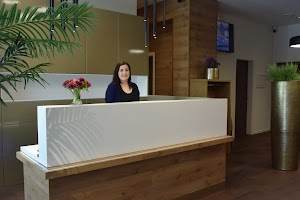
Dentistry and the dental laboratory are two sides of the same coin, and nowhere is that partnership more visible than in a modern clinic in Budapest treating UK and Irish patients. Chairside skill and lab craftsmanship work together to turn treatment plans into stable, natural-looking smiles that feel like real teeth rather than “work in the mouth”.
Dentistry and the lab as one integrated team
In a well‑organised Budapest clinic, the dentist and the dental laboratory do not operate as separate worlds. The dentist diagnoses, plans and prepares; the lab designs and builds the restorations that bring that plan to life. When both are under one roof or in a very close partnership, treatment becomes faster, more predictable and more tailored to each patient.
For UK and Irish visitors, this integration matters. Many arrive for complex work: implants, full‑arch restoration, multiple crowns, cosmetic veneers. These are not off‑the‑shelf products. They are custom‑made medical devices that must fit precisely and harmonise with the patient’s bite, face and personality. That level of individualisation is only possible when the clinical and technical teams communicate constantly.
From diagnosis to design: what happens first
Every high‑quality restoration starts with a thorough diagnostic phase. The dentist:
-
Examines teeth, gums and bite
-
Takes X‑rays and, where necessary, 3D scans
-
Records photos and sometimes videos of the smile and face
-
Discusses expectations: colour, shape, “Hollywood” vs natural, longevity, budget
These findings are then shared with the lab technician. Together, dentist and technician decide:
-
Which material best suits the case (for example, layered ceramic, zirconia, composite)
-
What kind of framework is needed for strength
-
How to manage spacing, bite height and support for lips and cheeks
-
Whether a mock‑up or temporary trial smile should be made first
This planning stage is especially important for patients coming from abroad, because it reduces the risk of surprises later and ensures that the limited days in Budapest are used efficiently.
The role of an in‑house or partner dental laboratory
A clinic that has its own laboratory or an exclusive partner gains several practical advantages for international patients:
-
Faster turnaround times
When technicians work nearby, impressions and scans can be processed the same day. Adjustments can be made quickly without shipping delays. -
Better communication
The dentist can walk over to the lab, show photos, discuss nuances of shade and shape, or invite the technician to see the patient in person. This is invaluable for front teeth and full smile makeovers. -
Consistency of quality
Working with the same lab day after day builds a shared standard. The technician learns the preferences of each dentist: how they prepare teeth, how they like contacts and occlusion, what kind of aesthetics they aim for.
For patients from the UK and Ireland, this often translates into fewer appointments, fewer remakes and a smoother overall experience.
Crowns and bridges: where precision matters most
Crowns and bridges are a major point of contact between the clinic and the lab. After teeth are prepared and impressions or digital scans are taken, the technician:
-
Designs the frameworks to fit precisely over the prepared teeth or implant abutments
-
Builds the shape of each tooth, taking into account opposing and neighbouring teeth
-
Adds layers of ceramic to mimic the variation found in natural enamel and dentine
The goal is not just to “fill a gap” but to restore symmetry, function and a comfortable bite. A crown that looks perfect but throws off the bite can cause jaw tension, headaches or early wear. A good lab team understands how tiny adjustments to thickness and height can affect chewing and comfort.
In cases of full‑arch or full‑mouth reconstruction, this process becomes even more critical. The lab essentially builds a new chewing system, and the dentist relies on their technical skill to balance strength, aesthetics and hygiene access.
Implant restorations and the laboratory
Implant‑borne crowns and bridges place particular demands on the lab:
-
The technician must interpret implant positions and angles accurately from analog or digital models.
-
Custom abutments are often designed to optimise emergence profiles, gum support and screw‑access positioning.
-
The final suprastructure must distribute forces evenly across all implants and remaining teeth.
A Budapest clinic with strong implant experience will typically have lab technicians who work with implants daily, not occasionally. They understand the challenges of angulation, aesthetic zones and the different requirements of single implants, small bridges and full arches.
For UK and Irish patients, this expertise is vital. It means that complex implant plans can be executed in fewer visits, with a higher likelihood that the definitive work will be stable and comfortable for years.
Temporary restorations and trial smiles
Another important part of the dentistry‑laboratory relationship is temporary work. Before a final crown, bridge or full‑arch is fitted, many patients wear provisional restorations. These allow:
-
Testing of new tooth length, width and shape in real life
-
Assessment of speech, lip support and smile line
-
Fine‑tuning of bite before committing to the final material
The lab plays a central role here, too. Provisional restorations can be simple or very detailed, depending on the case. When a patient travels from abroad, it is often worth investing in well‑made temporaries that give a realistic preview of the final result. Feedback from these temporaries is then used by the lab to refine the definitive work.
Colour, translucency and individual character
One of the most visible signs of a good clinic‑lab partnership is the quality of colour matching. Natural teeth are not one flat shade; they have:
-
Slight transparency at the edges
-
Subtle variations between neck and incisal third
-
Fine character lines and tiny imperfections that make a smile look real
Skilled technicians will often:
-
Use multiple ceramic powders or composite layers to reproduce this complexity
-
Invite the patient for a “shade‑taking” session under controlled lighting
-
Keep photographic records to guide future work
For a UK or Irish patient, this attention to detail is especially important in the front teeth, where any mismatch is immediately noticeable in photos and daily life.
Quality control and adjustments
Once restorations return from the lab, the dentist acts as the final inspector and tailor:
-
Checking fit on the model and in the mouth
-
Verifying contact points and bite contacts
-
Assessing colour, shape and overall harmony with the face
Often, minor adjustments are needed. When the lab is close and communication is easy, these can be carried out quickly. Sometimes the technician will even come into the surgery to see the restoration in place and make fine adjustments on the spot.
This flexible back‑and‑forth is one of the reasons many international patients report that complex cases feel surprisingly smooth in Budapest, even within short stays.
How UK and Irish patients benefit from this cooperation
The close link between dentistry and the lab in a Budapest clinic offers several concrete advantages to visitors:
-
Treatment can be condensed into fewer trips, because diagnostics, preparatory work, lab fabrication and fitting are planned as a single workflow.
-
Prototypes and provisionals can be adjusted quickly, avoiding long waits or shipping delays.
-
The end result tends to look and feel more natural, because functional and aesthetic decisions were made collaboratively rather than in isolation.
-
If something is not quite perfect, there is a clear path to refinement – the dentist knows exactly which technician created the piece and can communicate directly about what needs to change.
For cross‑border patients, who do not have the luxury of many small follow‑up visits, this efficiency and clarity are critical.
Everyday dentistry still depends on the lab
Even outside of large reconstructions, the dental laboratory is involved in many routine treatments:
-
Fabricating night guards to protect against grinding
-
Making whitening trays for home bleaching
-
Producing partial dentures or transitional prostheses
-
Creating precision attachments for removable components
Each of these items must fit comfortably and function correctly. The more closely the dentist and technician cooperate, the less likely it is that a patient will experience sore spots, poor retention or breakages.
Values that underpin a strong clinic‑lab relationship
From a patient’s point of view, the most reassuring clinics share several qualities in their approach to lab work:
-
Transparency
Patients are told what materials will be used, where and how their restorations are made, and what guarantees apply. -
Consistency
The clinic avoids constantly changing laboratories or materials, preferring to build long‑term partnerships and standards. -
Respect for craftsmanship
Technicians are treated as key members of the team rather than anonymous suppliers. Their input on complex cases is actively sought and valued. -
Continuous improvement
Both dentists and technicians keep up with new materials, digital workflows and bonding techniques, updating their protocols when real benefits appear.
These values matter as much as equipment or décor. They determine whether the final result is simply “acceptable” or truly stable, comfortable and pleasing for years.
What this means for someone considering treatment in Budapest
For UK and Irish patients comparing options, understanding the clinic’s relationship with its laboratory can be as important as reading about individual dentists. A few questions can tell a lot:
-
Does the clinic work with an in‑house lab or a stable partner, or does it send work to many different places?
-
Can the technician see me in person if my case is complex or very aesthetic?
-
How are shade and shape decisions made?
-
What kind of guarantees exist for crowns, bridges and implant restorations, and how does the lab support those guarantees?
Clear, confident answers suggest a mature, well‑integrated system behind the scenes, not just a nice waiting room.
Ultimately, dentistry and the dental laboratory in a Budapest clinic treating UK and Irish patients are not separate stories. They form one combined service: diagnosis, planning, preparation, design, fabrication and fitting, all working together to rebuild function and appearance. When that partnership is strong, patients feel the difference every time they smile, speak and eat without thinking about their teeth.