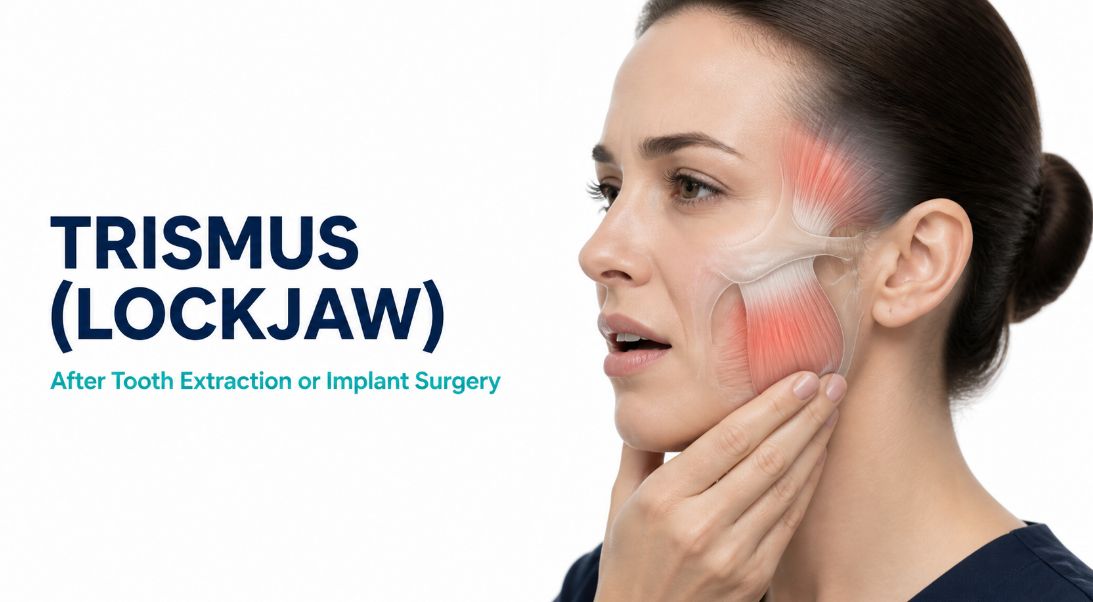
Trismus, often called “lockjaw”, means reduced ability to open the mouth normally. After a difficult tooth extraction, wisdom tooth removal, bone graft or dental implant surgery, temporary jaw stiffness is common. It usually results from post-operative swelling, inflammation and spasm in the chewing muscles – not from the jaw being permanently locked.
For most patients, mild trismus improves steadily over several days to a few weeks with rest, soft foods, suitable pain relief and gentle recovery measures. However, jaw stiffness that worsens, persists, or occurs alongside fever, swelling, pus or difficulty swallowing needs urgent dental assessment.
This guide explains why trismus happens after dental surgery, what recovery commonly looks like, safe self-care measures and red-flag symptoms for UK patients.
Important: This article provides general information only. It does not replace advice from your dentist, oral surgeon, GP or pharmacist. Follow your own post-operative instructions, particularly if you have had extensive grafting, sedation, jaw surgery or treatment for infection.
What Is Trismus?
Trismus is a clinical term for limited mouth opening caused by problems affecting the chewing muscles, jaw joints or nearby tissues. The main chewing muscles include the masseter muscles in the cheeks, the temporalis muscles at the temples and the pterygoid muscles deeper in the face.
A healthy adult’s comfortable mouth opening varies, but many people can normally fit about three fingers vertically between their upper and lower front teeth. If you can only fit one or two fingers, you may have restricted opening.
After dental surgery, trismus usually occurs because the muscles and tissues around the jaw have been stretched, irritated or inflamed. It may make everyday tasks uncomfortable, including:
- Eating and chewing
- Brushing back teeth
- Yawning
- Speaking for long periods
- Taking tablets
- Wearing a removable denture
- Attending further dental appointments
The phrase “lockjaw” can sound alarming. In common dental use, it usually means temporary jaw-muscle stiffness. It is different from tetanus-related lockjaw, which is rare and a serious medical emergency involving widespread muscle spasms, difficulty swallowing and other systemic symptoms.
Why Does Trismus Happen After Tooth Extraction?
Jaw stiffness is especially common after procedures involving the lower jaw, long appointments or surgical access around the wisdom teeth.
The most common causes include the following.
Prolonged Mouth Opening
During an extraction, implant placement or bone-grafting procedure, your mouth may need to stay open for an extended period. This can strain the jaw joints and chewing muscles, particularly if you already have TMJ symptoms, clench your teeth or have a naturally limited opening.
The muscles can respond with soreness and protective spasm afterwards. This is similar to muscle stiffness after holding another part of the body in an unusual position for too long.
Surgical Trauma and Inflammation
A surgical extraction may involve lifting gum tissue, removing a small amount of bone, sectioning a tooth or placing stitches. Implant surgery may involve drilling into bone, placing graft material or manipulating surrounding tissues.
The body’s inflammatory response to surgery causes swelling, tenderness and tissue-fluid build-up. In the lower jaw, this inflammation can affect muscles close to the surgical field and reduce mouth opening temporarily.
Post-surgical trismus is recognised after complicated lower wisdom tooth removal, implant placement and other dental or maxillofacial procedures. Swelling, bruising and inflammation can restrict jaw mobility during recovery.
Local Anaesthetic Injection
Some local anaesthetic injections are administered close to deeper jaw muscles. In rare cases, local tissue trauma, bleeding or irritation at the injection site can contribute to muscle spasm and stiffness.
This does not mean the injection was necessarily administered incorrectly. It is a known, uncommon post-treatment response.
Lower Wisdom Tooth Surgery
Impacted lower wisdom teeth are particularly associated with trismus. These teeth may sit deep in bone and can require a longer procedure, placing the jaw muscles under more strain.
Research notes that pain, swelling and trismus are common inflammatory complications after third-molar surgery and can affect quality of life in the days after treatment.
Infection or Dry Socket
Most early post-operative jaw stiffness is inflammatory and temporary. However, a dental infection can also cause trismus, especially if swelling spreads into the tissues around the jaw muscles.
A worsening restricted opening with fever, bad taste, pus, facial swelling or feeling unwell is not something to manage alone at home. It needs urgent dental review.
Dry socket usually causes worsening, deep pain a few days after extraction after loss of the blood clot. It does not normally cause marked facial swelling or severe trismus on its own, but dental assessment is still needed if symptoms are severe.
TMJ Disorder or Bruxism
Existing temporomandibular disorder (TMD), jaw clicking, joint arthritis, muscle pain, clenching or teeth grinding can make recovery feel more difficult. Surgery may temporarily flare an underlying jaw-muscle or joint problem.
Tell your dentist before treatment if you have a history of jaw locking, chronic facial pain, TMJ disorder or restricted mouth opening. They may plan shorter appointments, extra jaw support or an adapted recovery plan.
What Does Normal Post-Operative Jaw Stiffness Feel Like?
Normal short-term trismus usually feels like tightness, aching or resistance when trying to open the mouth. It may be worse in the morning, when chewing, after long conversations or after trying to yawn widely.
Common features include:
- Mouth opening that feels limited or sore
- Tightness in the cheeks, temples or jaw joints
- Mild pain when chewing
- Difficulty biting into larger foods
- Tenderness near the lower jaw or surgical site
- Stiffness that develops within the first day or two
- Gradual improvement as swelling settles
Imperial College Healthcare NHS Trust advises that jaw opening can be sore and uncomfortable for three to four days after minor oral surgery and that stiffness may occasionally last for two to four weeks. East Sussex Healthcare NHS Trust similarly notes that jaw stiffness after tooth removal can settle over two to four weeks.
The key reassuring feature is progressive improvement. Even if recovery is slow, the jaw should gradually become easier to open, pain should reduce and your ability to eat and brush should improve.
When Does Trismus Usually Start and Improve?
Every procedure and patient is different, but this general timeline may help.
Do not compare your recovery rigidly with another person’s. A simple extraction may cause only a day or two of stiffness, while lower wisdom tooth surgery, multiple implants, a sinus lift, bone grafting or a long procedure can produce a longer recovery period.
Safe Remedies for Jaw Stiffness After Dental Surgery
Your surgeon’s aftercare instructions take priority. In general, conservative measures are the first approach.
1. Use Pain Relief Safely
Managing pain can help you move the jaw more comfortably and avoid muscle guarding. Your dental team may recommend paracetamol, ibuprofen or a combination, depending on your procedure and medical history.
Do not exceed the dose stated on the packet or prescribed by your clinician. Ibuprofen and other anti-inflammatory medicines are not suitable for everyone, including some patients with stomach ulcers, kidney disease, bleeding risks, heart problems, certain forms of asthma or relevant medication interactions.
Ask a pharmacist, dentist or GP if you are unsure. Do not apply aspirin directly to the gum or surgical site, as it can burn tissue and increase bleeding.
2. Eat a Soft Diet Temporarily
Choose foods that do not require wide opening or powerful chewing. Suitable options can include:
- Scrambled eggs
- Yoghurt
- Porridge
- Mashed potato
- Soft pasta
- Blended soups that are not hot
- Fish
- Smoothies from a cup
- Well-cooked vegetables
- Rice dishes
Cut food into small pieces and chew on the opposite side if possible. Avoid crusty bread, chewing gum, steak, nuts, crisps, hard sweets and large sandwiches while the jaw is tight.
A soft diet may be particularly helpful for the first few days. NHS oral-surgery guidance specifically notes that soft foods may be better while the jaw opening is sore and uncomfortable.
3. Use Cold Therapy Early, If Advised
A cold pack may reduce discomfort in the early inflammatory phase. Wrap an ice pack, gel pack or bag of frozen peas in a clean cloth – never place it directly on your skin.
Use it intermittently rather than continuously. Stop if it causes pain, excessive numbness or skin irritation.
Research into cryotherapy after lower wisdom tooth surgery is mixed. One systematic review reported that intermittent cold therapy may reduce pain, swelling and trismus, while another found evidence quality was low and did not show a clear trismus benefit. In practical terms, a wrapped cold pack may be reasonable for comfort during the first day or two if your surgeon has not advised against it, but it is not a substitute for assessment when symptoms are worsening.onlinelibrary.
4. Consider Gentle Warmth Later
Once the early swelling phase has settled, gentle warmth can sometimes feel soothing for muscle tightness. A warm – not hot – compress applied to the cheek may relax the masseter muscle.
Do not use heat if swelling is increasing, the area is hot and red, or infection is suspected. In those situations, contact your dentist instead.
5. Gentle Jaw Movement, Not Forceful Stretching
Rest is important during the immediate post-operative period, but complete avoidance of jaw movement for too long can allow stiffness to persist. Once your clinician says it is appropriate, begin light, comfortable movements.
A simple approach may include slowly opening and closing the mouth within a pain-free range, then moving the jaw gently from side to side. The aim is to regain normal mobility gradually, not to force a wider opening.
A UK NHS patient guide for trismus recommends three gentle stretches, holding each for three seconds, three times a day. It advises stretching until you feel a pull but not pain.
Stop and contact your clinic if movement causes sharp pain, new bleeding, worsening swelling, clicking with locking, or a sudden reduction in opening.
6. Gentle Massage for Muscle Tightness
After the acute phase, gentle massage can help some people with cheek-muscle tension. Use clean fingertips to massage the masseter muscle on the side of the cheek in small circles. Avoid pressing hard over a fresh extraction, implant incision, graft site or swollen area.
If your procedure involved extensive surgery, ask your clinician when massage is safe. The NHS trismus guide describes gentle circular massage of tender or tight masseter areas for around 30 seconds, twice daily.
7. Maintain Oral Hygiene
Jaw stiffness can make brushing difficult, especially around lower back teeth. However, keeping the mouth clean remains important for recovery.
Use a small, soft toothbrush and take your time. Follow your dentist’s instructions about salt-water rinses, prescribed mouthwash and cleaning around stitches or implant sites. Do not force the mouth wide open or push bristles into a healing socket.
If you cannot open your mouth enough to maintain hygiene or take food and fluids comfortably, contact the clinic.
Medicines and Professional Treatments
Most routine trismus does not require specialist medication. It improves as post-operative inflammation resolves.
For planned surgical procedures, clinicians may sometimes prescribe a corticosteroid before or shortly after surgery to reduce post-operative swelling and trismus. This is a clinical decision based on the procedure, your health, medication history and potential risks.
Evidence reviews of impacted wisdom tooth surgery suggest corticosteroids can reduce post-operative pain, swelling and trismus, particularly when given before surgery. However, patients should not self-medicate with steroids or request them as a universal treatment. Steroids can be unsuitable for people with certain infections, diabetes, stomach problems, immune conditions and medication interactions.nature+1
If stiffness persists, your dentist may consider:
- Review for infection, dry socket, retained fragments or joint problems
- A customised jaw-exercise plan
- Referral to a physiotherapist with TMJ experience
- Referral to oral and maxillofacial surgery
- Further imaging if a structural problem is suspected
- Bite-splint assessment where clenching or TMD contributes
Persistent trismus needs a diagnosis; it should not be managed indefinitely with painkillers alone.
Trismus After Implant Surgery
Implant surgery can cause jaw stiffness, especially if it includes multiple implants, guided bone regeneration, ridge augmentation, a sinus lift or a long period of mouth opening.
Mild jaw tightness may occur because of:
- Local inflammation around the surgical site
- Muscle strain from mouth opening
- Soft-tissue stitches and swelling
- Grafting procedures
- Anxiety-related clenching after treatment
- Pre-existing TMJ symptoms
Protect the surgical area while it heals. Do not force jaw exercises if this stretches a grafted site or causes pain around an implant. Ask your implant clinician when to begin normal jaw movement and chewing.
If you have had sedation, remember that stiffness, tiredness and reduced coordination can make eating and oral hygiene more difficult for the first day. Arrange soft food in advance and follow the specific sedation aftercare given to you.
Trismus After Wisdom Tooth Removal
Lower wisdom tooth surgery is one of the most common triggers for temporary trismus. The tooth may be close to the chewing muscles and require a longer procedure, which increases swelling and muscle irritation.
Research confirms that trismus is generally less severe after a simple forceps-only extraction than after surgical lower wisdom tooth removal.
This does not mean severe stiffness should simply be ignored. Contact the treating dentist if the jaw is becoming harder to open after day three, pain is escalating, you cannot eat or drink adequately, or symptoms are accompanied by fever or facial swelling.
When Jaw Stiffness May Signal Infection
Most post-operative stiffness is caused by inflammation. However, trismus is also an important possible symptom of spreading dental infection.
Contact your dentist the same day if you notice:
- Increasing swelling after the first two to three days
- Pain that becomes more severe instead of improving
- A bad taste, pus or foul-smelling discharge
- Fever, chills or feeling unwell
- Increasing redness or warmth of the face or gums
- Difficulty opening the mouth that is worsening rapidly
- Pain or swelling spreading into the cheek, jaw, under the jaw or neck
- Difficulty taking fluids or medication because opening is limited
A dental infection may need cleaning, drainage or other local treatment. Antibiotics are not always the answer by themselves; the cause must be assessed and managed by a dental professional.
Emergency Warning Signs
Seek urgent help through your dentist’s emergency service or NHS 111 if you have concerning symptoms and cannot access your clinic.
Call 999 or attend A&E immediately if you experience:
- Difficulty breathing
- Difficulty swallowing saliva or liquids
- Rapidly spreading swelling of the face, jaw, mouth floor or neck
- Severe swelling affecting the airway
- Confusion, collapse or signs of a serious allergic reaction
- Severe facial trauma
- A jaw that is stuck open and cannot be closed
These symptoms are not typical of routine post-operative trismus.
Preventing Jaw Stiffness Before Dental Surgery
Not every case can be prevented, but planning can reduce risk and improve comfort.
Before surgery:
- Tell your dentist about past TMJ disorder, jaw locking, clenching, grinding or limited opening.
- Discuss any history of facial injury, arthritis or jaw surgery.
- Follow pre-operative instructions carefully.
- Stop smoking and vaping where possible, especially around surgical treatment.
- Ask whether a long procedure can be broken into shorter appointments if you have significant TMJ problems.
- Arrange soft meals before your appointment.
- Make sure you understand your pain-relief plan before local anaesthetic or sedation begins.
Your clinician may take extra care to support the jaw during long procedures and minimise unnecessary mouth opening.
Frequently Asked Questions
How long does lockjaw last after tooth extraction?
Mild jaw stiffness often improves within several days. After more complex surgery, it can take up to two to four weeks to fully settle. The important sign is gradual improvement.imperial.nhs+1
Can I force my mouth open after dental surgery?
No. Do not force the jaw open, use objects to stretch it or persist through sharp pain. Gentle, pain-free movement may be helpful once your clinician says it is safe.
Is trismus normal after implant surgery?
Mild, temporary stiffness can occur after implant surgery, particularly if the procedure was lengthy or included grafting. Worsening stiffness, fever, swelling or difficulty swallowing requires prompt review.
Should I use heat or ice for jaw stiffness?
Cold may help comfort during the first one or two days when swelling is prominent. Gentle warmth may be more comfortable later for residual muscle tightness. Follow your clinician’s advice and avoid heat if infection is suspected.
Can a dry socket cause trismus?
Dry socket mainly causes severe pain and may cause mild local swelling. Significant or worsening jaw stiffness, especially with fever or facial swelling, should be assessed to rule out infection or another complication.
When should I contact my dentist?
Contact the clinic if your mouth opening is getting worse, you cannot eat or drink normally, symptoms are not improving after one to two weeks, or stiffness occurs with increasing pain, fever, pus, bad taste or swelling.
Final Advice
Trismus after tooth extraction, wisdom tooth surgery or implant placement is usually a temporary inflammatory response. During the first days after surgery, a soft diet, appropriately used pain relief, gentle recovery measures and patience are often enough.
The correct recovery pattern is gradual improvement. If your jaw becomes more difficult to open, swelling spreads, pain escalates, you develop fever or discharge, or you have trouble swallowing or breathing, do not wait – contact your dental clinic, NHS 111 or emergency services as appropriate.
Sources
- Review: An update on trismus—causes, diagnosis and treatment
- Imperial College Healthcare NHS Trust: Minor oral surgery aftercare
- East Sussex Healthcare NHS Trust: Tooth removal under local anaesthetic
- Review: Management of inflammatory complications in third-molar surgery
- Study: Trismus and pain after removal of impacted lower third molars
- NHS patient guide: Limited mouth opening and jaw stiffness
- Evidence-Based Dentistry: Corticosteroids and post-operative pain, swelling and trismus
- Systematic review: Cryotherapy after lower wisdom tooth surgery