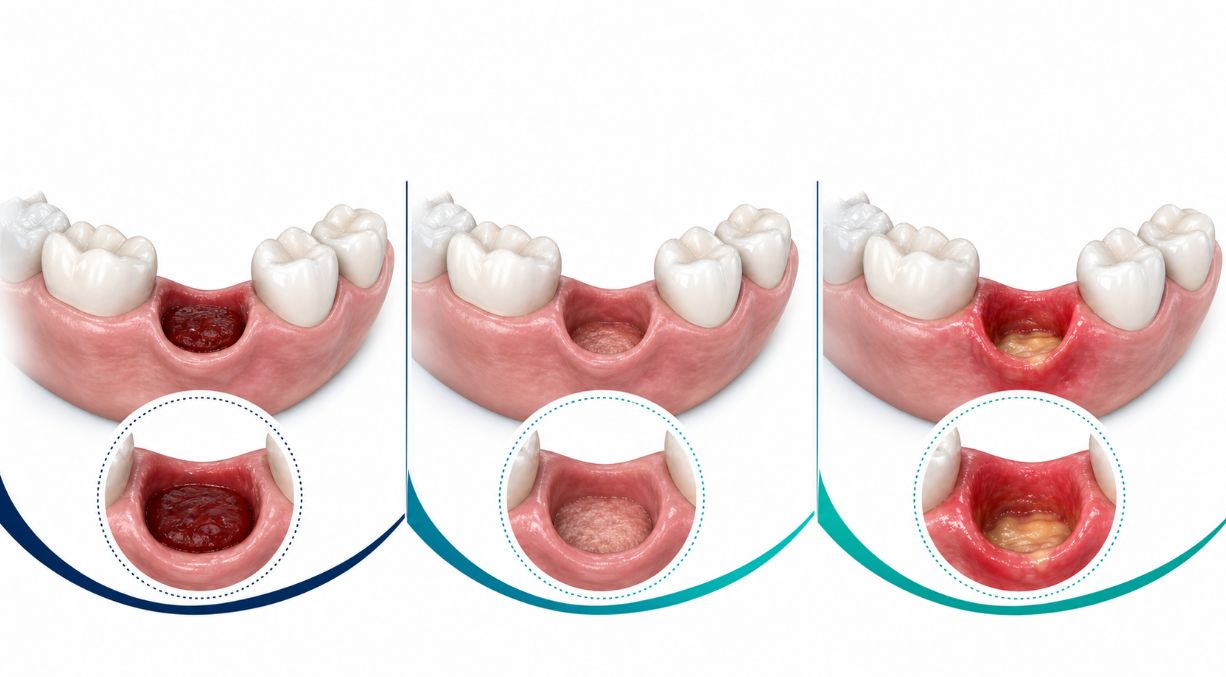
After a tooth extraction, it is natural to look at the socket and worry that something is wrong. The area may appear dark red, white, yellow, cream-coloured or uneven during the first days and weeks. It may also feel sore, taste slightly unusual or become swollen before it improves.
These changes are often part of normal healing. However, worsening pain, spreading swelling, true pus, fever or feeling unwell can indicate an active infection that needs prompt dental assessment. Another common concern is dry socket, which can cause severe pain but is different from a typical infection.
This guide explains how normal extraction healing differs from an infected socket and dry socket, with a focus on what UK patients should do if they are unsure.
Important: You cannot reliably diagnose an extraction problem from appearance alone. Do not poke, scrape, squeeze, rinse aggressively or attempt to remove white or yellow material from the socket. Contact your dentist or oral surgery provider if you are concerned.
The Short Answer: What Is Normal and What Is Not?
A healthy extraction socket usually progresses from a blood clot to soft healing tissue, called granulation tissue, and then to gum tissue covering the area. Granulation tissue can look whitish, yellowish-white, cream-coloured or pink. It is often mistaken for pus, but it is usually a normal part of recovery.
Pus is different. It is a thick discharge made up of inflammatory fluid, bacteria and immune cells. It is commonly associated with increasing redness, worsening swelling, pain, bad taste, unpleasant smell, fever or feeling generally unwell.
Dry socket, also called alveolar osteitis, happens when the protective blood clot is lost or breaks down too early. It typically causes significant pain a few days after extraction, often with a bad taste or odour, but without the substantial swelling, pus and fever more suggestive of an active infection.guysandstthomas.
How a Tooth Extraction Socket Normally Heals
A tooth extraction creates a wound in the gum and jawbone. Your body begins repairing it immediately. The healing process happens in stages, and the socket can look different from one day to the next.
First 24 Hours: The Blood Clot
Immediately after extraction, a blood clot forms in the socket. This clot acts like the body’s natural dressing. It protects the underlying bone and nerve endings, limits bleeding and provides a foundation for new healing tissue.
The clot may look dark red, brownish-red or almost black. This is usually normal. It can appear larger than expected, and saliva may remain lightly blood-stained for a short time.
During this stage, the key goal is to protect the clot. Avoid rinsing, spitting forcefully, smoking, vaping, using a straw, drinking alcohol or repeatedly checking the socket with your tongue or fingers. Scottish Dental Clinical Effectiveness Programme advice recommends avoiding mouth rinsing until the next day and avoiding hard sucking or disturbing the clot.
Days 2 to 3: Soreness and Swelling Can Peak
It is common for soreness and swelling to become more noticeable during the first two or three days after an extraction, particularly after wisdom tooth removal or surgical treatment. Some bruising can occur, and opening the mouth may feel uncomfortable.
This does not automatically mean infection. NHS guidance notes that swelling often appears during the first 48 hours after dental surgery and may take five to seven days to improve. Other NHS aftercare advice notes that swelling can increase on day two or three and then resolve over approximately seven to 10 days.
Pain should generally be manageable with the medication recommended by your dental team, although every person’s recovery is different. The overall trend matters most: normal postoperative pain should gradually stabilise and begin improving, rather than becoming increasingly severe after initial improvement.
Days 3 to 7: Granulation Tissue Appears
This is the stage that causes the most anxiety. The original blood clot begins to be replaced by granulation tissue. This is healthy, newly forming tissue containing tiny blood vessels, collagen and repair cells.
Granulation tissue is not always bright pink. In an extraction socket, it may look:
-
White or off-white
-
Pale yellow or creamy yellow
-
Greyish-white
-
Pink or reddish-pink
-
Uneven, soft or slightly lumpy
A white or yellowish layer does not automatically mean infection. It may be fibrin, a protein involved in wound healing, or healthy granulation tissue developing over the clot. This tissue should be left alone.
The socket may still look like a hole at this point. Surface gum closure takes time, and deeper bone healing takes much longer. A socket that remains visibly open during the early weeks is not by itself a sign that it has failed to heal.
Weeks 1 to 2: Gum Tissue Gradually Closes
Over the next one to two weeks, the gum begins growing over the socket. The area may still appear indented or contain a small opening where food can collect. This is more noticeable after larger molar and wisdom tooth extractions.
Some tenderness while chewing is normal, and the site may feel sensitive when food touches it. Gentle salt-water rinsing from the day after extraction, if advised by your dentist, can help maintain cleanliness.
Weeks 3 to 6: The Socket Becomes Less Noticeable
The gum surface continues to mature and the socket becomes shallower. Bone underneath is still remodelling, even if the gum appears largely healed. Depending on the size and location of the extraction, complete bone healing can take several months.
What Does Normal Granulation Tissue Look Like?
Granulation tissue is part of normal wound repair. It is usually attached to the socket rather than flowing out of it. It does not generally cause a sudden increase in severe pain, spreading facial swelling or fever.
Typical features of normal healing tissue include:
-
A white, cream, pale yellow, pink or red appearance
-
A soft covering over the socket
-
Tissue that stays in place rather than draining like liquid
-
Mild tenderness that improves over time
-
No increasing facial swelling
-
No fever, chills or feeling unwell
-
No severe worsening pain after initial improvement
Patients frequently search online for “white stuff in extraction socket” or “yellow tissue after tooth extraction”. In many cases, the answer is healing tissue—not pus.
However, do not use colour as the only test. A socket can look pale while healing normally, and a socket can have an infection without obvious visible pus. The pain pattern, swelling, temperature, general health and clinical examination are all important.
What Is Pus and What Does It Look Like?
Pus is a discharge linked to infection. It may be white, yellow, yellow-green or greenish, but its consistency and associated symptoms are more useful than colour alone.
Unlike granulation tissue, pus may be thick, creamy, sticky or liquid. It can ooze or drain from the socket, sometimes when pressure is applied nearby. Patients may notice a sudden unpleasant taste, foul smell or discharge on the tongue.
Possible signs of pus or active infection include:
-
Thick yellow, cream or green discharge
-
Increasing redness and warmth of nearby gum tissue
-
Swelling that is getting larger rather than settling
-
Persistent foul taste or bad breath
-
Pain that is worsening, throbbing or spreading
-
Fever, chills or feeling generally unwell
-
Tender glands in the jaw or neck
-
Difficulty opening the mouth
-
Pain or swelling spreading into the cheek, jaw, neck or under the tongue
A UK NHS hospital aftercare leaflet lists redness of the gums, increased pain, swelling, discharge, fever and feeling generally unwell among common features of infection.
Pus should never be squeezed out at home. Applying pressure can worsen pain, disturb healing tissue and spread infection. Contact a dentist for assessment.
Dry Socket vs Infection: The Key Differences
Dry socket is often confused with infection because both can cause pain, a bad taste and unpleasant breath. But they have different causes and treatment approaches.
Dry socket occurs when the socket’s blood clot fails to develop properly, becomes dislodged or breaks down prematurely. This leaves sensitive bone and nerve endings less protected. It is primarily an inflammatory complication, not automatically a bacterial infection.
This table is a guide, not a diagnostic tool. For example, an infection can sometimes be localised without fever, and dry socket can occasionally involve mild swelling. A dentist should assess significant or worsening symptoms.
Guy’s and St Thomas’ NHS Foundation Trust states that dry socket usually occurs three to five days after treatment and may involve increasing pain, foul taste and bad breath. The same guidance notes that pain and swelling from infection usually worsen around four to six days after surgery.
What Does Dry Socket Feel Like?
Dry socket pain is usually more intense than routine extraction soreness. It may feel deep, sharp, throbbing or aching. The pain can travel to the ear, temple, eye, cheek or neck on the same side as the extraction.
Other dry socket symptoms may include:
-
An empty-looking hole where the tooth was removed
-
Little or no visible blood clot
-
A whitish or grey surface that may be exposed bone
-
Bad breath
-
A foul or unpleasant taste
-
Pain that is poorly controlled by usual pain relief
-
Symptoms that become worse rather than better after day two or three
NHS guidance describes dry socket as a dull, aching gum or jaw pain that may occur with a bad smell or taste. SDCEP guidance advises urgent dental care, optimal pain control, saline irrigation and a suitable socket dressing where appropriate. Antibiotics are not routinely recommended unless there are signs of spreading infection, systemic illness or a relevant medical reason.
Why Infection Can Develop After an Extraction
Dental extractions are common and infection is not inevitable. However, it can occur when bacteria enter or remain in the wound, particularly where there was pre-existing dental infection, difficult surgery, retained debris, poor healing or medical factors affecting immunity.
Risk factors can include:
-
Existing abscess, gum disease or severe tooth infection
-
A difficult or surgical extraction
-
Smoking or vaping
-
Poorly controlled diabetes
-
Immune suppression or certain medical treatments
-
Inadequate cleaning around the healing site
-
Food debris becoming trapped in a deep socket
-
Failure to follow post-operative advice
-
Retained tooth fragments, bone fragments or other local issues
Having a risk factor does not mean infection will happen. Equally, infections can occur in people who follow all aftercare advice carefully. Do not blame yourself; seek prompt professional help if symptoms suggest a problem.
How Dentists Treat an Infected Extraction Socket
Treatment depends on the cause, severity and whether the infection is localised or spreading. A dentist may examine the socket, check for debris, assess swelling and take an X-ray if needed.
Possible treatment may include:
-
Gentle irrigation to remove trapped food and debris
-
Local drainage where pus is present
-
Cleaning the socket
-
Removal of a retained fragment where relevant
-
Pain relief advice
-
A medicated dressing if dry socket is diagnosed
-
Antibiotics where there are signs of spreading or systemic infection
-
Urgent referral to oral and maxillofacial services for severe cases
Antibiotics are not a substitute for treating the source of a dental infection. SDCEP guidance states that local measures, such as drainage, are the first option for bacterial infection without spreading or systemic signs. Antibiotics are appropriate when infection is spreading, systemic symptoms are present, or the patient is immunocompromised.
This is why it is important not to demand antibiotics without an examination. They may be necessary in some cases, but unnecessary use can cause side effects, fail to solve the local problem and contribute to antibiotic resistance.
How to Care for a Healing Socket
Following your dentist’s instructions is the best way to support normal healing. General UK aftercare measures often include the following.
During the First 24 Hours
-
Bite on the gauze for the time instructed by your dentist.
-
Rest while the local anaesthetic wears off.
-
Avoid rinsing and forceful spitting.
-
Do not smoke or vape.
-
Avoid alcohol.
-
Do not drink through a straw.
-
Avoid hot drinks and hard foods.
-
Do not touch the socket with your fingers or tongue.
-
Eat soft foods once numbness has worn off.
From the Following Day
-
Brush the rest of your teeth normally and clean carefully near the extraction site.
-
Gently rinse with warm salt water if your dentist has advised this.
-
Avoid vigorous swishing.
-
Continue choosing softer foods while the area is tender.
-
Avoid smoking and vaping for as long as possible during healing.
-
Attend any planned review appointments.
SDCEP patient advice recommends beginning gentle warm salt-water rinses from the day after dental treatment, three or four times daily for five days.
What Not to Do
Patient anxiety can lead to actions that delay healing. Avoid the following:
-
Do not pick at the socket with a toothbrush, toothpick, finger or fingernail.
-
Do not scrape off white, yellow or cream-coloured tissue.
-
Do not try to drain a suspected infection yourself.
-
Do not place aspirin directly on the gum or socket.
-
Do not insert cotton wool, tissues, herbal remedies or food into the socket.
-
Do not use alcohol-based mouthwash unless advised.
-
Do not stop prescribed medication without medical advice.
-
Do not rely on internet images to diagnose infection.
-
Do not ignore worsening pain, swelling or fever.
The appearance of a socket can be misleading. A dentist can inspect the area safely, assess the surrounding tissues and determine whether treatment is needed.
When to Contact Your Dentist
Contact your dentist or oral surgery provider promptly if you have:
-
Pain that becomes significantly worse after day two or three
-
Increasing swelling after the first few days
-
A persistent bad taste or foul smell with worsening symptoms
-
Suspected pus or discharge
-
Redness spreading beyond the socket
-
Fever, chills or feeling unwell
-
Difficulty opening your mouth
-
New swollen glands under the jaw or neck
-
Persistent bleeding
-
A socket that looks empty and is severely painful
-
Any concern that you are not healing normally
If you cannot reach your dental practice in the UK, contact NHS 111 for urgent advice. Seek emergency care immediately for difficulty breathing or swallowing, rapidly spreading facial or neck swelling, severe trauma or uncontrolled bleeding.
NHS Scotland guidance advises contacting a dentist if there are signs of infection following wisdom tooth removal or heavy bleeding from the extraction site.
Frequently Asked Questions
Is white tissue after an extraction always infection?
No. White or yellowish-white tissue is often fibrin or granulation tissue, both of which are normal parts of healing. It becomes more concerning when accompanied by worsening pain, swelling, pus, fever or feeling unwell.
Can food look like pus in an extraction socket?
Yes. Food debris can become trapped in a socket and may look pale, yellow or white. Do not probe deeply to remove it. Gentle salt-water rinsing after the first 24 hours may help, but contact your dentist if debris is persistent or symptoms worsen.
Can a healing socket smell?
A mild temporary taste or smell can occur after extraction, especially while blood clot and healing tissue are present. A strong, worsening foul smell with increasing pain, swelling or discharge needs dental assessment.
Is dry socket dangerous?
Dry socket is very painful but is usually not dangerous when treated promptly. It should still be assessed because severe pain can affect eating, sleeping and daily life, and a dentist needs to rule out infection or other complications.
Can I tell the difference between granulation tissue and pus by looking?
Not reliably. Granulation tissue is often attached to the healing socket and does not usually cause fever or increasing swelling. Pus may appear as a thick discharge and is more likely with swelling, worsening pain and feeling unwell. If unsure, contact your dentist.
Final Advice
Normal extraction healing can look unpleasant before it looks better. A dark clot, followed by a white, yellowish or pink layer of granulation tissue, is often expected. The most reassuring sign is a recovery that gradually improves: pain becomes less intense, swelling starts settling and normal function slowly returns.
Dry socket is more likely when severe pain develops or intensifies several days after extraction, often with an empty-looking socket and bad taste. Active infection is more concerning when there is worsening or spreading swelling, true pus, fever, malaise or difficulty opening the mouth.
If you have any doubt, do not disturb the socket. Contact your dentist for advice and assessment.
Sources
- Guy’s and St Thomas’ NHS Foundation Trust: Dental surgery and recovery
- Scottish Dental Clinical Effectiveness Programme: Alveolar osteitis (dry socket)
- SDCEP: Post-treatment advice for dental patients
- NHS inform: Wisdom tooth removal
- Bedfordshire Hospitals NHS Foundation Trust: Tooth removal post-operative care
- SDCEP: Management of spreading or systemic dental infection