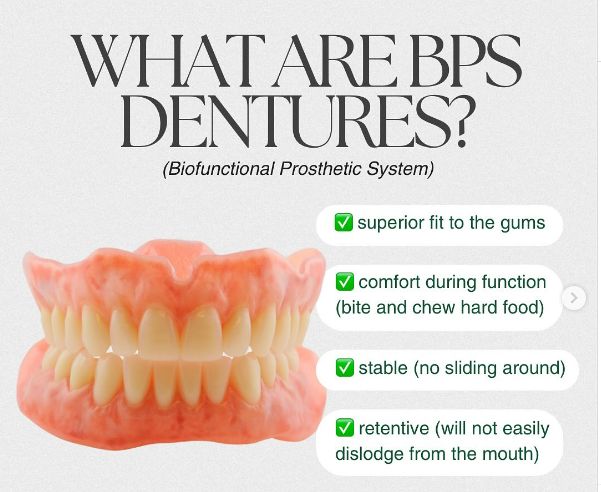
In modern dentistry, restorative solutions are no longer judged solely by function. Patients today expect comfort, natural appearance, long-term stability, and a treatment experience that respects both their anatomy and their lifestyle. Within this evolving landscape, BPS — Biofunctional Prosthetic System — has emerged as one of the most advanced and reliable denture fabrication concepts available.
Developed through decades of research and clinical refinement, BPS represents a systematic, patient-centered approach to removable prosthetics. It is not simply a brand or a material choice; rather, it is a complete protocol that integrates clinical diagnostics, impression techniques, jaw relation recording, laboratory craftsmanship, and occlusal principles into one cohesive system.
This review explores what BPS dentistry truly is, how it differs from conventional dentures, who it is best suited for, and why it has become a benchmark for high-quality removable prosthetics worldwide.
Understanding BPS: More Than Just Dentures
BPS stands for Biofunctional Prosthetic System, a concept originally developed by Ivoclar in collaboration with leading prosthodontists and dental technicians. The philosophy behind BPS is grounded in one central idea: dentures should work in harmony with the patient’s biology, not against it.
Traditional denture fabrication often relies on simplified impressions, generic occlusal schemes, and limited customization. While this approach can restore basic function, it frequently leads to issues such as instability, sore spots, speech difficulties, compromised chewing efficiency, and an unnatural appearance.
BPS takes a fundamentally different route. It treats each denture as a precision medical device, tailored to the patient’s individual anatomy, neuromuscular function, and facial dynamics.
The Core Principles of BPS Dentistry
1. Biofunctionality
At the heart of BPS lies the concept of biofunctionality — the idea that prosthetics should integrate seamlessly with the patient’s muscles, joints, and oral tissues. Every step of the process is designed to respect how the jaw moves, how muscles contract during speech and chewing, and how forces are distributed across the denture base.
This approach reduces stress on soft tissues and underlying bone, contributing to better long-term comfort and oral health.
2. Precision Impressions and Records
One of the most significant differences between BPS dentures and conventional dentures is the accuracy of impressions and jaw registration.
BPS uses advanced impression techniques that capture not only static anatomy but also functional movements. Special trays, border molding, and carefully controlled materials allow clinicians to record how tissues behave during real-world function.
Equally important is the precise recording of jaw relationships using specialized devices that measure vertical dimension, centric relation, and facial symmetry with exceptional accuracy.
3. Balanced Occlusion
Occlusion — the way teeth contact during function — plays a critical role in denture stability and comfort. BPS dentures are designed using a fully balanced occlusal scheme, ensuring even contact on both sides of the arch during chewing and lateral movements.
This balance minimizes tipping forces, enhances chewing efficiency, and significantly reduces the risk of sore spots and denture movement.
4. Aesthetic Integration
BPS places strong emphasis on facial aesthetics, not just tooth replacement. Tooth shape, size, shade, and arrangement are selected to complement the patient’s facial features, age, and smile dynamics.
Lip support, smile line, and phonetics are carefully evaluated, resulting in dentures that look natural in both static and dynamic expressions — including speech and laughter.
The BPS Workflow: A Systematic Approach to Excellence
BPS is defined as much by how dentures are made as by what they are made from. The workflow is structured and standardized, ensuring consistent results when performed correctly.
Clinical Phase
-
Comprehensive examination of oral tissues, jaw joints, and facial proportions
-
Functional impressions using specialized trays and materials
-
Precise jaw relation recording with calibrated instrumentation
-
Try-in stage to verify aesthetics, phonetics, and occlusion before final processing
Laboratory Phase
-
Fabrication by certified dental technicians trained specifically in BPS protocols
-
Use of premium acrylics and denture teeth designed for balanced occlusion
-
Heat-polymerized processing to enhance strength, fit, and longevity
-
Final quality control checks before delivery
The close collaboration between dentist and laboratory is a defining element of the BPS concept.
Who Is BPS Best Suited For?
BPS dentures are not limited to a single patient group. They are particularly beneficial for:
Fully Edentulous Patients
Patients missing all teeth in one or both arches often experience instability with conventional dentures. BPS offers superior retention, comfort, and chewing efficiency, making daily life significantly easier.
Patients With Previous Denture Problems
Individuals who have struggled with ill-fitting dentures, chronic sore spots, or speech difficulties often see dramatic improvements after transitioning to BPS.
Patients Seeking High Aesthetic Standards
Because of its emphasis on facial harmony and natural appearance, BPS is ideal for patients who prioritize aesthetics alongside function.
Patients Not Suitable for Implants
For medical, anatomical, or financial reasons, some patients are not candidates for implant-supported prosthetics. BPS offers one of the most advanced non-implant alternatives available.
BPS vs Conventional Dentures
| Aspect | Conventional Dentures | BPS Dentures |
|---|---|---|
| Impression accuracy | Basic | Highly detailed, functional |
| Occlusal balance | Often limited | Fully balanced |
| Comfort | Variable | High |
| Stability | Moderate | Enhanced |
| Aesthetics | Standardized | Individually customized |
| Longevity | Moderate | Long-term performance |
While conventional dentures can meet basic needs, BPS elevates removable prosthetics into a category closer to precision rehabilitation.
Materials Used in BPS Dentistry
BPS systems utilize high-quality denture base materials and premium denture teeth designed to mimic natural enamel translucency and wear characteristics.
The acrylic bases are processed under controlled conditions to reduce porosity and shrinkage, improving fit and hygiene. Denture teeth are engineered for strength, color stability, and long-term occlusal harmony.
These material choices contribute to both the functional and aesthetic longevity of the prosthesis.
Patient Experience: What to Expect
Patients undergoing BPS treatment often report a noticeably different experience compared to traditional dentures.
During Treatment
-
More detailed appointments focused on measurements and function
-
Try-in stages that allow patient feedback and fine adjustments
-
Clear explanations of each step
After Delivery
-
Faster adaptation period
-
Improved speech clarity
-
Enhanced chewing ability
-
Reduced sore spots and adjustments
While BPS dentures require a greater initial time investment, many patients feel the results justify the process.
Maintenance and Long-Term Care
Like all removable prosthetics, BPS dentures require proper maintenance:
-
Daily cleaning with non-abrasive products
-
Regular dental check-ups to monitor fit and oral tissues
-
Periodic relining as the jawbone naturally changes over time
Because of their precise fit and balanced design, BPS dentures often maintain comfort and function longer than standard dentures when properly cared for.
Cost Considerations
BPS dentures typically cost more than conventional dentures due to:
-
Advanced clinical procedures
-
Specialized materials
-
Certified laboratory involvement
-
Increased chair time and expertise
However, many patients view BPS as a long-term investment rather than a short-term solution. Reduced adjustments, greater durability, and improved quality of life often offset the initial expense over time.
BPS in the Broader Context of Modern Dentistry
As dentistry continues to move toward personalized, evidence-based care, systems like BPS reflect a broader shift in philosophy. Rather than focusing on speed or standardization, BPS emphasizes precision, collaboration, and respect for biological function.
In an era where patients are increasingly informed and discerning, BPS aligns well with expectations for premium care and predictable outcomes.
Limitations and Considerations
While BPS offers numerous advantages, it is important to acknowledge certain considerations:
-
Results depend heavily on clinician training and experience
-
Not all dental practices offer true BPS protocols
-
Treatment time is longer than basic denture fabrication
Patients should ensure their provider is experienced with the system and works with a certified laboratory to achieve optimal results.
Conclusion: A Gold Standard in Removable Prosthetics
BPS dentures represent a thoughtful, scientifically grounded approach to denture fabrication that prioritizes function, comfort, and aesthetics in equal measure. It is not merely a product, but a philosophy that respects the complexity of the human oral system.
For patients seeking a removable prosthetic solution that feels stable, looks natural, and supports long-term oral health, BPS stands out as one of the most refined options available today.
When executed correctly, BPS dentures can restore not just smiles, but confidence, comfort, and quality of life — making them a compelling choice in modern prosthodontic care.